TMJ disorders cause pain or dysfunction in the jaw joint and the muscles that move it. Common signs include jaw pain, clicking or popping, trouble opening wide, and morning headaches. Most cases start with conservative care such as a custom night guard, muscle therapy and habit changes.
Your temporomandibular joints (TMJs) connect your lower jaw to your skull, just in front of your ears. You use them every time you talk, chew, yawn or swallow. When the joints or the muscles around them are irritated, the result can be anything from a dull ache to headaches that start the moment you wake up.
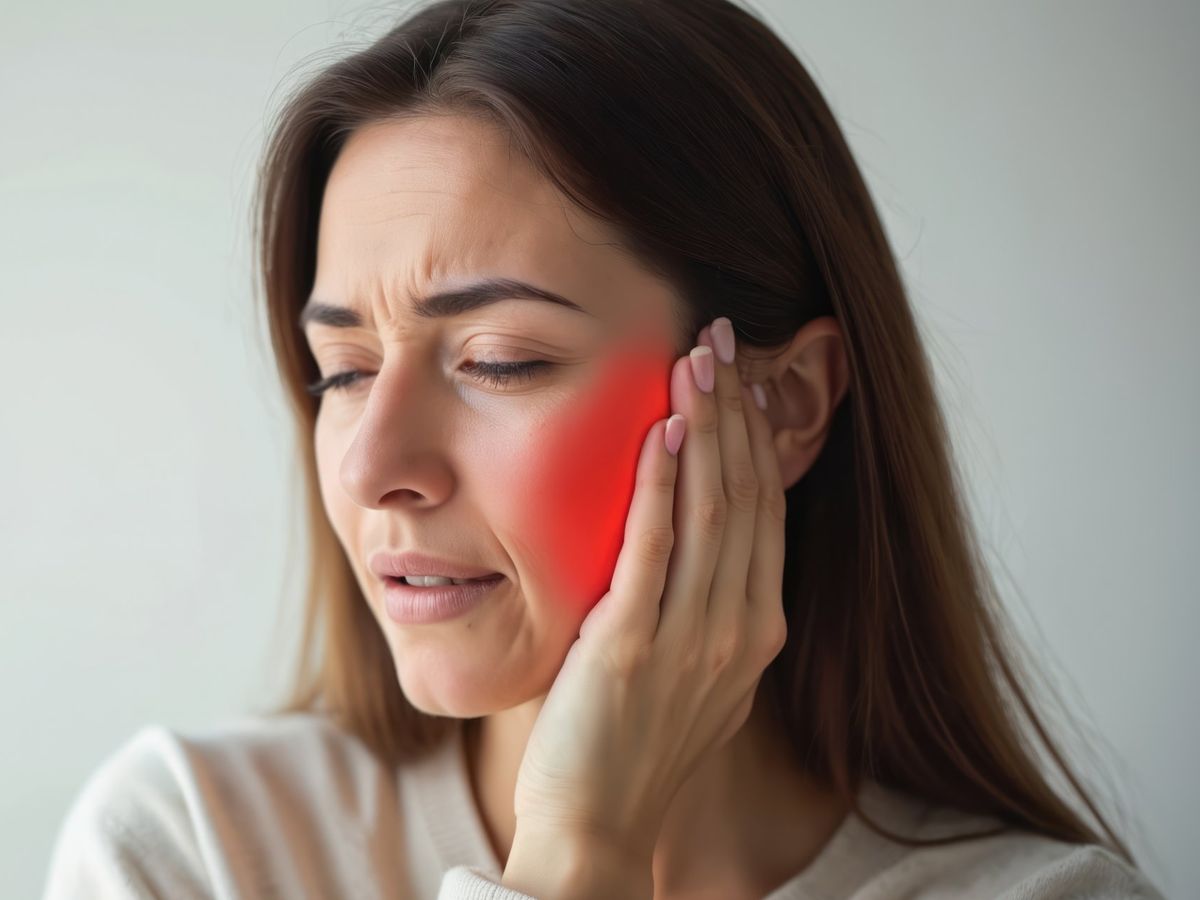
Common signs of a TMJ problem
- Pain or tenderness in the jaw, face, or around the ears
- Clicking, popping or grating sounds when you open or close your mouth
- A jaw that feels tight, gets "stuck," or won't open fully
- Headaches, especially in the morning or at the temples
- Worn, chipped or sensitive teeth from clenching or grinding
Occasional clicking without pain is common and isn't always a concern. Pain, locking, or symptoms that interfere with eating or sleep are worth getting checked.
What causes it?
There's rarely a single cause. Clenching and grinding (often during sleep or stressful days), bite changes, jaw-muscle tension, joint inflammation and past injuries can all play a part. That's why we look at the whole picture — your teeth, bite, muscles, airway and habits — instead of only treating the symptom.
How TMJ pain is treated
Most people improve with conservative, non-surgical care. Depending on what we find, your plan may include:
- A custom night guard to protect teeth and reduce strain from nighttime clenching
- Muscle therapy to relax overworked jaw muscles, including EMFACE, a needle-free treatment we offer as part of functional care
- A referral for orofacial myofunctional therapy when tongue posture or jaw habits are part of the picture
- Bite evaluation and adjustments when the way your teeth meet is part of the problem
- Simple home habits such as softer foods during flare-ups, warm compresses and avoiding gum chewing
When should you see a dentist?
If jaw pain lasts more than a week or two, keeps coming back, or your jaw locks open or closed, schedule an evaluation. A functional consultation lets us examine your joints and muscles and explain what's likely driving your symptoms — and what will actually help.
Frequently asked questions
Can TMJ go away on its own?
Mild flare-ups sometimes settle with rest and soft foods, but symptoms that keep returning usually have an underlying cause, like nighttime clenching, that's worth addressing.
Is TMJ treatment covered by dental insurance?
Coverage varies by plan. We'll review your benefits before treatment and can split costs into monthly payments with Cherry.
TMJ & Jaw Pain Relief (EMFACE) at Goodall Family Dentistry
Learn about tmj & jaw pain relief (emface)Ready to schedule?
Book online anytime, or call our front desk — we’re happy to answer questions about scheduling, insurance or your visit.
This article is for general education and isn't a substitute for an exam or personal medical advice.